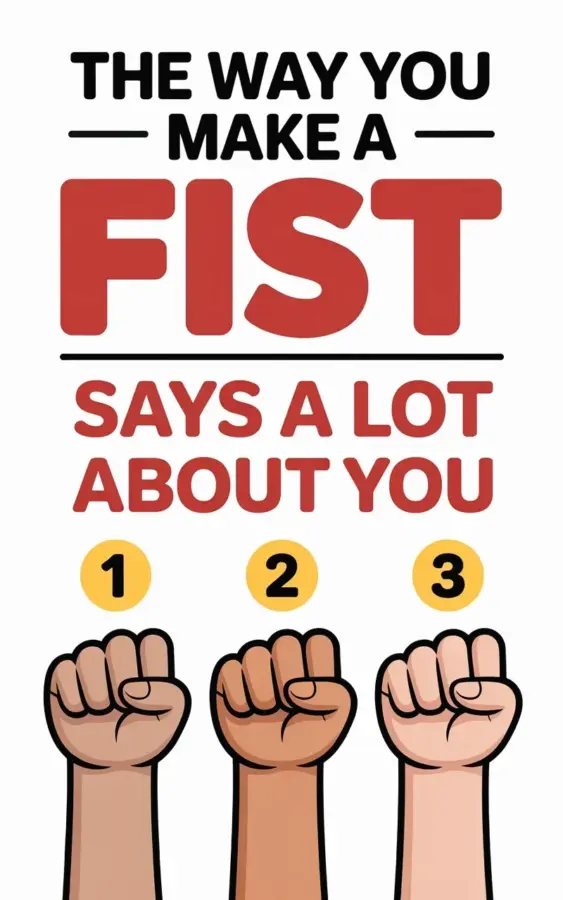
You have probably seen that minimalist infographic floating around, the one with the white background and the bold words “THE WAY YOU MAKE A FIST SAYS A LOT ABOUT YOU.” The three numbered fists sit at the bottom, each drawn in a simple cartoon style with brown skin tones and black outlines. Fist positions meaning is one of those random body language topics that feels silly until you realize how often you make a fist without thinking. But here is the catch: most people read these images wrong, and they walk away with a personality label that does not fit. This guide is not just another breakdown of the three fist shapes. It is a common-mistakes-and-how-to-avoid-them walkthrough, so you can actually learn something accurate about yourself and your friends.
Why Most People Misread the Fist Shape Personality Test
The first mistake is treating this infographic like a BuzzFeed quiz with a single right answer. People see their fist matches shape #2, then they read the label and decide that is their whole personality. That is not how body language works. Your fist position changes with your mood, your hand size, and even the surface you are pressing on.
Another mistake is ignoring the visual details. In the infographic, each fist has a yellow number circle next to it, but the fists themselves have subtle differences. Shape #1 has fingers loosely wrapped, shape #2 has the thumb tucked over the fingers, and shape #3 has a very tight, angular clench. If you only look at the numbers, you miss the actual clues.
Fist Shape #1: The Relaxed Wrap and What It Signals About You
People who make a loose fist, the one where all four fingers fold over without digging in, tend to be the calmest in the room. The thumb rests on top of the index finger or along the side, but there is a visible gap between the palm and the fingertips. In the infographic, this is the first fist on the left, drawn with a gentle curve to each finger. The mistake people make here is thinking this shape means weakness. Actually, it suggests low tension and high control.
A relaxed wrap often shows up when someone is listening carefully or preparing to speak, not when they are about to fight. In personality terms, it points to someone who adapts easily and does not need to prove themselves through force. If you naturally make this fist, you probably approach decisions with patience and avoid unnecessary conflict.
Fist Shape #2: The Hidden Thumb and the Accuracy Trap
Shape #2 is the most common fist in photos, and it is also the one people misread the most. Here the thumb wraps across the front of the fingers, hiding the tips. Some people call this the thumb-hugging fist. If you look at the infographic, this is the middle fist, and the yellow circle labeled 2 sits right beside it. The mistake? Assuming this shape means aggression. In many body language guides, a hidden thumb is actually a self-comforting gesture.
Think about when you make this fist. It often happens when you are bracing for news, standing in a crowded place, or trying to keep your hands steady. Personality-wise, a thumb-hugging fist suggests someone who is observant, slightly guarded, and very good at controlling their reactions. You might be the friend who stays calm in an argument but accidentally shows tension in your hand. That is not a bad thing. It just means you feel things deeply but show it quietly.
Fist Shape #3: The Full Clench and How to Avoid Misjudging It
The third fist is the tight, white-knuckle variety. Every finger is pressed hard into the palm, and the thumb is either locked underneath or pressed against the side. In the image, this fist looks stiff and angular, almost like a block. The common mistake is reading this as pure anger. Sometimes it is, but more often it is a sign of high effort or intense focus. People make this fist when they are lifting something heavy, gripping a steering wheel during traffic, or even when they are determined to remember an important thought.
If you make this fist regularly, you might be someone who throws yourself fully into whatever you are doing. The bad side is that you hold onto stress in your body. The good side is that you finish what you start. To avoid misreading it, ask yourself what the person was doing right before they made the fist. Context matters more than the shape itself.
Common Mistakes When Comparing Your Fist to the Infographic
Here is the biggest mistake of all: comparing your fist to the drawings exactly. The infographic uses a simple cartoon style with black outlines and brown skin tones, which is great for illustrating the idea, but it is not a photo of a real hand. Your fingers might be longer, your thumb might sit differently, or you might have a dominant hand that makes a slightly different fist than your other hand.
Also, do not assume you are permanently one number. Body language is fluid. You can be a #2 when you are anxious and a #1 when you are relaxed. The infographic is a snapshot, not a tattoo. To get a real read, notice your fist across different situations. Look for patterns, such as always tucking your thumb before a meeting or clenching your fist during tense movie scenes. That repeated behavior is what reveals your personality, not a single pose.
This post was researched and drafted with AI assistance, then personally reviewed and edited by Copper Finds Vera before publishing.
Leave a Comment