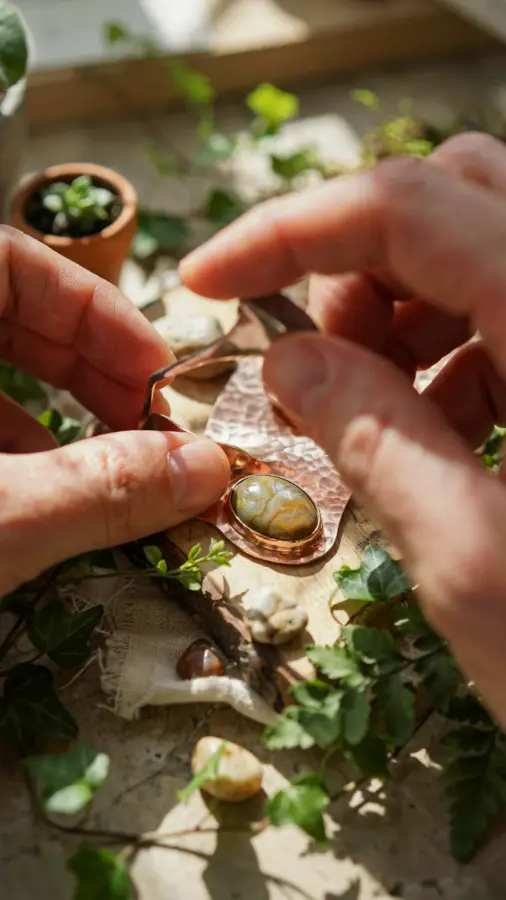
Why hammered copper works so well with natural wood tones
When I first tried adding a hammered copper tray to my coffee table, I wasn’t sure it would blend with the oak floors and walnut shelves I already loved. But something clicked. The tiny dents and dimples catch the light in a soft, uneven way, and that handmade look feels right at home next to raw wood grain. I’ve found that copper’s warm, pinkish-orange tone actually deepens the richness of walnut and contrasts beautifully with lighter ash or pine. Instead of fighting the furniture, hammered copper seems to absorb the room’s character.
One mistake I made early on was using too many shiny, polished metals. They bounced light in a harsh way that felt cold. Hammered copper, because of its textured surface, scatters light gently and creates little shadows that add depth. That’s why it feels so natural in a rustic kitchen or living room where you want cozy, not sterile.
Adding hammered copper vases to a neutral living room
My living room is mostly beige, cream, and soft grays. It looked pretty, but it lacked personality. A friend gave me a hammered copper bud vase about eight inches tall, and I placed it on the window sill with a single dried eucalyptus branch. That one piece changed the whole corner. The copper read as a warm accent without screaming for attention. I started collecting a few more sizes and grouped them on a side table with a stack of old books. The mix of heights and the uneven hammer marks make the arrangement feel collected over time, not staged.
If you stick to one or two hammered copper pieces in a room, let them sit near natural materials like linen or cotton. I put a large copper vase next to a chunky knit throw, and the textures play off each other perfectly. Avoid putting it next to glossy plastic or glass, because that contrast can look accidental rather than intentional.
- Small bud vases work best on windowsills or shelves with dried botanicals
- Medium floor vases anchor a corner when paired with a wooden stool
- Grouping different shapes creates visual rhythm without clutter
Choosing hammered copper lighting for cozy ambiance
Lighting was the game changer for me. I swapped a plain white pendant in my dining area for a hammered copper mini chandelier. The warm glow that comes through the metal is completely different from any other finish I’ve tried. The hammered texture breaks up the light into tiny flecks, so the whole space feels softly lit even with a single bulb. I also added a small hammered copper sconce near my reading chair. The shadows it throws on the wall are irregular and organic, much nicer than a plain dome.
For kitchens, consider a hammered copper pendant over the sink or an island. Because copper naturally patinas over time, the fixture will gain a darker, richer character as it ages. That change actually adds more rustic charm, not less. Just be aware that if you want a consistent color, you’ll need to polish it occasionally. But I personally love the way the metal evolves.
Practical tips for mixing copper with other metals and textures
I used to worry that mixing hammered copper with brass or iron would look messy. But I’ve learned that the key is to keep a common thread: all pieces should have a matte or satin finish rather than high polish. In my kitchen, I have a hammered copper canister set next to oiled bronze drawer pulls and a matte black faucet. The copper pops because it’s warmer than the other metals, but the similar low-shine finish ties them together.
A good rule of thumb is to let hammered copper be the dominant metal in a single zone, and then limit other metals to hardware or small accents. For example, if you use a hammered copper light fixture, keep your cabinet knobs in a neutral tone like matte black or aged bronze. Don’t add a second shiny copper piece, because it will compete with the texture.
My favorite hammered copper kitchen accents that get compliments
Last year I bought a hammered copper fruit bowl and placed it on my kitchen counter next to a wooden cutting board. It holds lemons and apples during the day and looks like a sculpture when empty. Guests always notice it and ask where I found it. I also have a set of hammered copper measuring cups. They’re not just decorative; they actually work well and develop a beautiful patina from regular use. The way the copper darkens around the rim gives them a story.
For a quick, low-cost accent, look for a hammered copper trivet or coaster set. Coasters are easy to change out if you decide you don’t like copper later. I keep a stack on my sideboard and use them whenever
#HammeredCopper #CopperHomeDecor #RusticDecorIdeas #CopperAccents #HomeDesignInspo
This post was researched and drafted with AI assistance, then personally reviewed and edited by Copper Finds Vera before publishing.
Leave a Comment