What Makes Sage Green Cabinets Work in a Farmhouse Kitchen
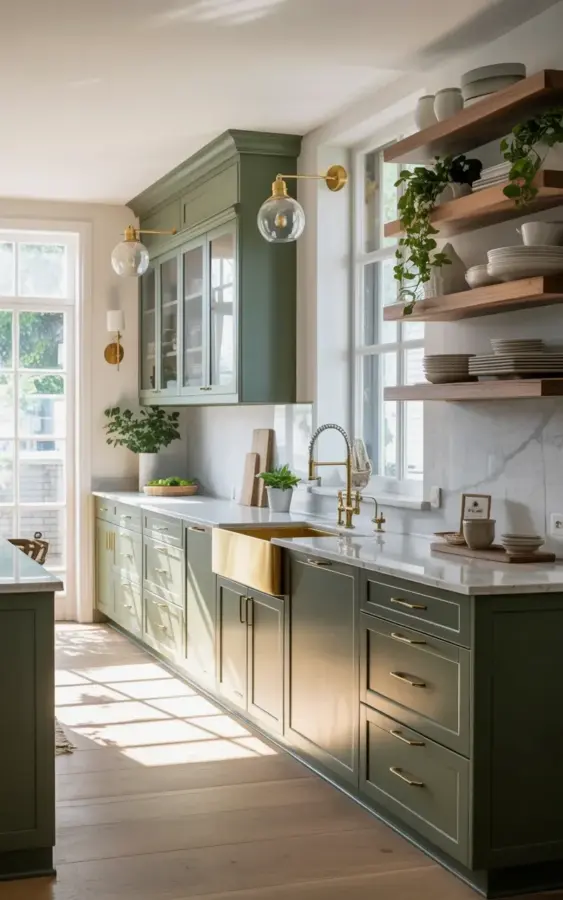
The morning light hits the brass faucet first, then spills across the white marble. I spent a solid hour staring at this kitchen photo, and I’m not embarrassed about it. This is the modern farmhouse kitchen that actually feels modern, and also farmhouse, without trying too hard. Sage green cabinets do most of the heavy lifting. Brass hardware adds the shine. And that gold farmhouse sink? Honestly, that sink is the whole reason I’m writing this.
For anyone new to this style, think of sage as a muted gray-green. It’s not bright like a lime tree. It’s not dark like a forest. It sits in that sweet spot where white walls and light oak floors feel like they belong together. The cabinets in the photo are tall and built in, which makes the room feel custom. But you can get the same effect with a standard cabinet set and a can of sage-colored paint.
One thing I love is how the green never screams for attention. It recedes a little, letting the brass hardware and the sink do the talking. That’s rare for colored cabinets. Most colored kitchens feel like a costume. This one feels like a room you can actually cook in.
Mixing Brass Hardware with Green: A Simple Rule of Thumb
Here’s the thing about brass hardware: it doesn’t need to match perfectly. The knobs, the pulls, the faucet, even the sconces can all be slightly different shades of gold and still look intentional. In the photo, the wall sconces are large with glass shades, and the cabinet hardware looks like it was made for them. They’re not identical, but they’re clearly cousins.
A simple rule I follow is to pick one dominant metal and then let the others tag along. If brass is the dominant metal, choose brass for the sink faucet and the cabinet pulls. Then let the sconces and the light fixtures over the island or peninsula follow that same warm tone. If you’re nervous, start with just the cabinet knobs. Swap those out first and live with the result for a week. You can always change the faucet later.
Brass does patina over time, especially if you touch it a lot. Some people hate that. I think it just adds road trips, or whatever. Just know that a polished brass finish will keep its shine longer than an unlacquered one, if that’s your preference.
Why a Gold Farmhouse Sink is Worth the Splurge
Look, a gold sink is a commitment. It shows water spots. It shows every splash and drip. But it also makes washing dishes feel a little more ceremonial, which is a weird thing to admit. The sink in this kitchen is the kind with an apron front, the part that faces the room and makes the sink look like it was carved into the base cabinet. It’s the focal point of the peninsula, and everything else just orbits around it.
Is it practical? Yes, because farmhouse sinks are deep. You can hide a shocking amount of dirty dishes in there when guests walk in. Are they expensive? New ones can run into serious money, but people sell used ones on marketplace all the time because they bought the wrong size or their contractor messed up the cabinet opening.
If a gold sink feels too bold, you can get the same apron front style in stainless steel or white fireclay. But the gold is what makes this kitchen feel special. It’s warm without being loud. I’d choose it over a regular white sink every single time.
Glass Upper Cabinets and Open Shelves: Styling Without Clutter
The upper cabinets in this kitchen have glass fronts, and you can see white dishes stacked neatly inside. That’s a choice. Glass doesn’t hide anything, so your dish collection has to be at least a little organized. But it also forces you to keep things simple, which is a good thing for a farmhouse kitchen.
On the right wall, there’s a row of wooden floating shelves holding stacks of white ceramic bowls and a few green plants. That’s it. No art, no stacks of cookbooks, no random mugs from tourist destinations. Just bowls and plants. The restraint is what makes it work. If you’re trying this at home, start with one shelf and only put things you actually use on it.
Plants on shelves are a classic farmhouse move, but be honest with yourself about which plants you can keep alive. I have killed every fern I’ve ever owned, so I go with pothos or a fake succulent. The photo shows a few different trailing plants, and they look alive. Just don’t feel bad if yours needs a little help.
White Marble Countertops and Light Oak Floors: Keep It Airy
Marble countertops are not the most practical choice, and I say that with love. They stain. They etch when lemon juice sits on them. But nothing else looks quite like white marble with soft gray veining. It catches the light and makes the whole room feel a little bit cleaner. In this kitchen, the marble sits on top of the cabinetry, and the light oak hardwood floor below keeps everything from feeling too cold.
Light oak floors are forgiving. They don’t show every crumb, unlike dark floors, and they add a warm, honeyed tone that plays nicely with green cabinets and brass hardware. If you’re installing new floors, go with a matte finish and a lighter stain. If you’re stuck with dark floors, you can still make this style work, just add more warm wood elements like the floating shelves and maybe a woven rug.
One tip I learned the hard way: always use a cutting board on marble. Always. I cringe thinking about the time I sliced a lemon directly on the counter and then spent an hour trying to rub out the white mark. Marble is beautiful, but it’s a high-maintenance friend.
How to Copy This Look on Any Budget
You don’t need a full remodel to get this style. Some of these changes take a weekend, some take just an afternoon. Here’s what I’d do if I were starting from scratch:
- Paint your existing cabinets. The color in the photo is a muted sage, but any similar paint from a hardware store will do. Sand and prime first, or use a tinted primer for cabinet paint.
- Swap out the knobs and pulls on the doors and drawers. Brass pulls are easy to find and easy to install with a screwdriver. This is the cheapest win, and it changes the whole feel instantly.
- Look for an apron-front sink on local resale sites. A lot of people buy the wrong size and then sell it at a big discount. Make sure you measure your cabinet base before you buy.
- For the floating shelves, you can buy ready-made ones or make them from a piece of solid wood. I’m not a woodworker, so I bought mine and just paid extra for the hidden bracket system. No regrets.
If you can’t paint your cabinets because you’re renting, consider a stick-on wallpaper or contact paper in a solid green tone. It’s not a permanent solution, but it’ll give you a taste of the look without a security deposit disaster. And if you’re nervous about the gold sink, find a gold faucet first and see how you like the metal in the room. You can always go bigger later.
Final Thoughts: Your Kitchen, Your Rules
This modern farmhouse kitchen with sage green cabinets and brass hardware is a great starting point, not a strict blueprint. The photo shows one specific space with a long peninsula layout, tall built-in cabinets, and glass uppers full of white dishes. But the core ideas work anywhere: calm green paint, warm metal accents, natural wood, and a sink that makes you want to wash your hands just to touch it.
Save the photo, pin this article, and send it to your contractor. Or just come back and stare at it like I do. I always notice something new, the way the sconces reflect in the glass cabinet fronts, or how the plants on the shelves break up all that wood. When you’re ready to start, pick one small change first. Maybe just the cabinet knobs. That’s how every kitchen renovation I’ve ever loved begins.
This post was researched and drafted with AI assistance, then personally reviewed and edited by Copper Finds Vera before publishing.
Leave a Comment