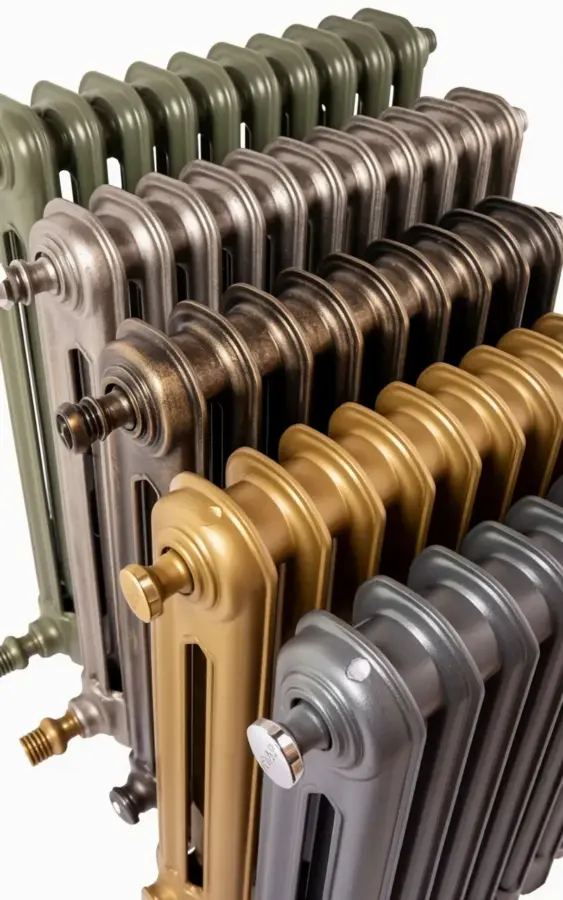
That diagonal lineup in the photo, four vintage cast iron radiators in the back and three in front, all with those gentle curved tops and circular valves, is the exact reason I started hunting for used cast iron. And if you’ve ever priced new radiators, you know it’s not the pipe that costs you, it’s the branding. But here’s the good news: finding vintage cast iron radiators on a budget isn’t about luck anymore. It’s about knowing which finish to choose and how to refinish what you find.
Matte Finishes Do the Heavy Lifting for You
A glossy radiator looks like a museum piece, and it shows every fingerprint, water spot, and dust bunny. A matte finish, on the other hand, hides all that. The set in the image shows four different matte tones: olive green, bronze, gold, and gunmetal gray. They all read as expensive, but the olive one is the one that gets me. It’s earthy without being loud, and it works with white subway tile better than any chrome accessory I’ve seen.
Matte paint also catches light differently. It softens the edges of that curved classic design, so the radiator doesn’t scream for attention. It just sits there and looks confident. That’s the whole vibe you want in a small bathroom.
How to Score Cheap Cast Iron Radiators
Here’s the thing: cast iron radiators are heavy, and that’s your advantage. Most sellers on classified sites aren’t looking to ship a 200-pound hunk of metal. They want it out of their basement. So you show up, you lift it yourself, and you make an offer. I’ve seen perfectly good vintage radiators go for under $50 because the buyer had a truck and a dolly. The rest is just patience.
Look for radiators with intact sections, no cracks, and no deep rust. Surface grime is fine, that’s what you’ll be fixing anyway. Here’s where to hunt:
- Salvage yards and architectural reuse stores (ask if they have a back corner with radiators, most do)
- Facebook Marketplace with search terms like “cast iron rad” or “old radiator” because misspellings can be the difference between finding a deal and losing it to a flipper
- Estate sales in older neighborhoods where the boiler was replaced and the radiators got pulled out during a renovation
The Best Matte Paint Colors for a Budget Bathroom
You can repaint a radiator in a weekend, but choosing the shade matters more than you think. The photo shows four finishes that all work together, but for a single bathroom, you only need one. Matte olive is the safest bet if you have neutral walls. Matte bronze looks amazing with wood vanities. Matte gold is a statement, and honestly, it’s not for everyone. The gunmetal gray reads almost blue in certain light, so test it before you commit.
I’m partial to the olive because it hides soap scum like nothing else. But here’s a practical tip: buy a small sample can of any matte paint you’re considering and paint a scrap piece of metal first. Look at it in your bathroom at noon, and then again under a dim bulb at night. The color changes way more than you’d expect.
DIY Radiator Refinishing: Tools and Prep
You don’t need a spray booth to get a factory look. But you do need to put in the prep time. Start with a wire brush to knock off loose rust. Then wipe the whole thing down with a degreaser. Cast iron is porous, so a good high-heat primer is non-negotiable. Use a matte spray paint designed for radiators, or a brush-on enamel if you want to avoid overspray in a small bathroom.
The first time I painted a radiator, I made the mistake of using regular wall paint. It flaked off within a month, and I had to scrape the whole thing. So learn from me, buy the expensive can of high-heat paint. It’s still cheap compared to a new radiator. Also, wear old clothes and open a window. Not because the fumes are toxic, but because you will absolutely brush against a freshly painted fin and ruin your favorite shirt.
The Curved Classic Design and Those Circular Valves
What makes these radiators look “vintage” is the shape, not just the color. The curved top and bottom sections soften the whole room. The circular valve with hexagonal nuts is the detail that sells it. If you’re restoring one, keep the original valve if it still works. It’ll be easier to turn than most modern thermostatic valves, and it looks better in photos. The valve is also the easiest part to clean with a small brush while the rest of the radiator sits in place.
You might think a radiator is just a bumpy metal rectangle, but the curve changes the entire silhouette. It makes the unit feel like a piece of furniture, not a utility. That’s the reason these things show up in design magazines. They’re not hiding in a corner, they’re getting featured.
New Reproductions vs. Secondhand Cast Iron
Reproduction radiators look the part, and they ship lighter and faster because they’re made of aluminum or thin steel. But they cost more, and they don’t have that century-old heft. For the same price as one new reproduction, I bought three real ones secondhand. The trade-off is that you have to clean them and repaint them yourself. That’s the whole trick to doing vintage cast iron radiators on a budget: you trade labor for money.
Secondhand radiators also have history. Some of them have been heating rooms since the 1920s. You can’t get that patina from a factory, and honestly, you don’t want to cover it all up. Let the grime and the rust tell the story, then paint over the rest. The result is a fixture that’s both original and exactly the color you want.
So which finish would you pick? I’m still leaning toward the matte olive, but the gunmetal gray has been growing on me. Whatever you choose, start by looking for a radiator that’s structurally sound, then worry about the color. The tools are simple, the paint is cheap, and the result is a bathroom that looks like it cost twice what you paid. Happy hunting, and drop me a comment if you’ve ever painted a radiator or if you have a favorite finish from the photo.
This post was researched and drafted with AI assistance, then personally reviewed and edited by Copper Finds Vera before publishing.
Leave a Comment