I first noticed it during a heated board game night with friends. We were all tense, waiting for the dice to land, and I looked around the table. Everyone’s hands were in fists, but they were all slightly different. One friend had her thumb tucked inside her fingers. Another had his knuckles white and rigid. Mine looked loose, almost like I was holding an invisible egg. That moment made me curious, and after digging into some body language research, I realized that your fistgrip can actually reveal quiet clues about your personality. And the best part? You can test it on yourself right now.
The Relaxed Fist: Position 1 in the Infographic
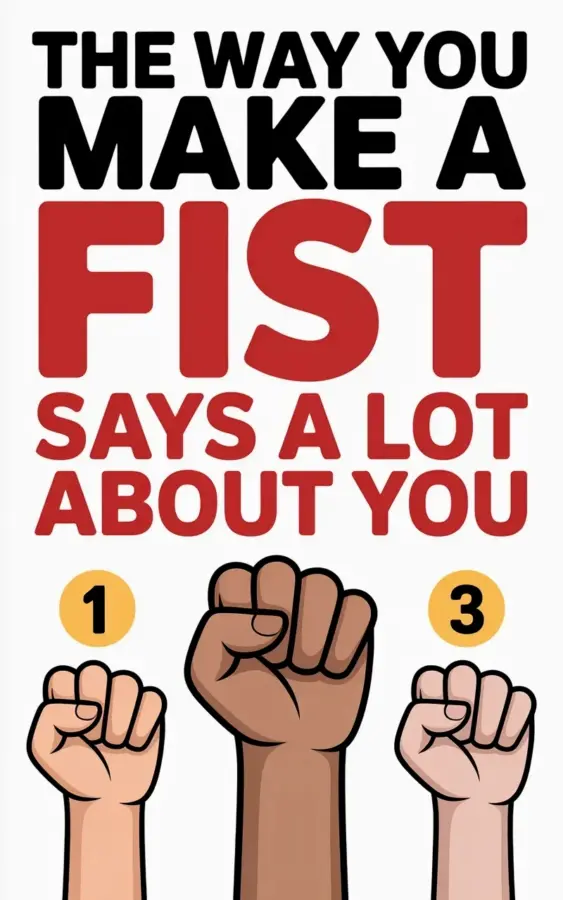
If you look at the minimalist infographic in the photo, the first fist shows fingers lightly curled with the thumb resting naturally on top. The hand looks soft, not tense. In real life, this is the fist you make when you aren’t really trying to squeeze anything. It’s the default “I’m thinking” clench.
People who naturally ball their hand this way tend to be easygoing and open. They rarely hold grudges and prefer to go with the flow. I have a coworker who always makes this exact fist when she listens during meetings. She’s the calmest person I know, never in a rush and surprisingly confident. If your hand falls into this position when you aren’t paying attention, you probably value harmony over confrontation.
The Tight Clench: Position 2 and What It Means
The second fist in the illustration is drawn with fingers pressed tightly together and the thumb wrapped across the middle knuckles. It looks like a solid ball of tension, and that’s exactly what it represents. This is the grip people use when they feel strongly about something, whether it’s excitement, frustration, or intense focus.
During that same board game night, my friend Mike sat with his knuckles pure white the whole time. He’s a high achiever, a planner, and someone who hates surprises. People with a tight clench often have a strong sense of control. They know what they want and they’re willing to fight for it. But the downside? They can carry stress in their hands all day without realizing it. I’ve noticed that when I make a tight fist out of habit, I’m usually bracing for bad news. It’s a body language signal that your brain is running on high alert.
The Thumb Over the Fingers: Position 3 and the Personality Behind It
Now look at the third fist in the photo. The thumb is tucked under the fingers instead of resting on top. This is sometimes called a “wrapped” fist. It looks different from the others, more defensive or protective. In my experience, this grip shows up most often in people who are cautious by nature.
I used to make this fist all the time when I was younger and anxious. My thumb would curl inside my fingers as if I was trying to hide my hand itself. Psychologists sometimes link this position to self-protection. People with this fist style may struggle with trust at first, but once they open up, they are deeply loyal friends. They don’t rush into anything, and they usually think twice before acting. If this is your natural grip, you probably value safety and stability over risk and novelty.
What Your Fist Grip Reveals About Your Emotional State
Beyond personality, your fist position can act like a mood ring for your current feelings. Body language experts have studied how hand tension mirrors internal stress. Here’s a quick breakdown I’ve found useful:
- Loose fist with open palm – calm, receptive, ready to listen.
- Medium clench with visible knuckles – focused or slightly irritated.
- Tight white-knuckle fist – high stress, anger, or intense concentration.
- Thumb-tucked fist – anxiety, insecurity, or holding back emotion.
I now check my own fist grip a few times a day, especially before important conversations. If I notice my thumb is hidden, I take a deep breath and uncurl my fingers. It sounds small, but changing your hand shape can actually shift your brain chemistry toward relaxation.
How I Discovered My Own Fist Personality
When I first read about fist psychology, I assumed I was a relaxed Position 1 guy. But after a week of paying attention, I realized I switch grips depending on the situation. At my desk, I mostly use a loose fist. But when I’m stuck in traffic, my thumb disappears into my fingers (Position 3). And when I’m about to give a presentation, my knuckles go white (Position 2).
That’s the honest truth: most of us don’t have a single fixed fist personality. We fluctuate based on energy and environment. The real value is noticing the pattern. For me, the white-knuckle grip clued me into my work stress before I even felt the headache coming. So I started using that as a signal to take a short walk or stretch my hands. It sounds goofy, but it worked. I went from grinding my fists in meetings to keeping them soft, and it made me feel less guarded.
Why This Hand Gesture Matters in Everyday Life
You might wonder, “Does it really matter how I make a fist?” I think it does, mainly because it’s a body language cue that other people read unconsciously. When you shake hands or gesture while talking, your default fist position can make you seem more tense or more approachable without you saying a word.
I’ve started teaching this little trick to friends who complain about feeling awkward in social situations. I tell them: try keeping your hands open and your fists relaxed when you listen. It signals “I’m safe” to the other person. That simple shift has helped more than any memorized conversation starter. Also, watching someone’s fist during a disagreement can tell you if they’re truly angry or just thinking hard. It’s not magic, it’s just observation.
Can You Change Your Fist Grip?
Yes, but it takes practice. Your default clench is a habit like any other. If you tend to make a tight fist when you’re anxious, you can train yourself to uncurl it. I do this by touching my thumb to my index finger and letting the others relax. It feels unnatural at first, but after a few weeks it becomes your new baseline.
The key isn’t to force a personality change. It’s to use the fist as a tool. If you want to appear more confident in a job interview, a medium-firm fist (Position 2) can give you an edge. If you want to calm a heated conversation, switch to Position 1. The infographic for this article shows three clear options, and each one is just a tool in your body language toolbox.
Next time you’re sitting around a table, look at your own hand. Is it relaxed, tight, or hidden? Chances are, that simple position says more about your mood than you realize. Try noticing it for a day, and see what you discover. You might be surprised by what your fist grip whispers about you.
#fistgrip #personalitytest #psychologyfacts #bodylanguage #handgestures
This post was researched and drafted with AI assistance, then personally reviewed and edited by Copper Finds Vera before publishing.
Leave a Comment